

With the war in the wider Middle East region already in its 4th week, everything indicates that the worst is yet to come. With many analysts speaking of the worst energy crisis since the 1970s, the US and Iran are exchanging ultimatums and threats… The President of the US, Donald Trump, warned that if Iran does not fully open the Strait of Hormuz by 01:45 AM Tuesday 24/3 (Greek time), then American forces will strike Iran's power generation plants… To this ultimatum, Iran responds that if the Americans take this step, they will strike all energy infrastructure in Israel and the Gulf states used by the US. However, the Revolutionary Guards denied that their goal is to strike desalination plants, which provide drinking water to the Gulf states… Beyond the exchange of warnings and ultimatums, Iran continues to strike areas of Israel, such as Tel Aviv and targets in the West Bank, with particular severity, while the Israeli military claims that since early Monday 23/3, it has been launching a new wave of air strikes on Tehran. At the same time, the Israelis appear to be preparing a broad ground invasion of Lebanon…
Iranian threats
"If Iran's fuel and energy infrastructure is attacked by the enemy, all energy infrastructure, as well as information technology infrastructure… belonging to the US and the regime of the region will become targets, according to previous warnings," stated Iran's military spokesperson, Ebrahim Zolfaqari. Additionally, the speaker of the Iranian Parliament, Mohammad Baqer Qalibaf, escalated the rhetoric, writing on X that critical infrastructure and energy facilities in the Middle East could be "irreparably destroyed" if Iranian power plants are attacked.
Mines across the Persian Gulf
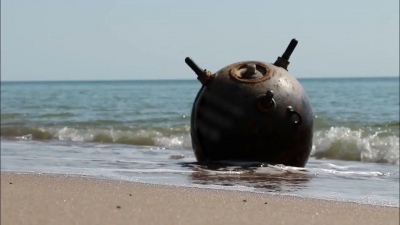
The Defense Council of Iran threatened to deploy mines to block the entire Persian Gulf in the event of an attack on its coasts or islands, Iranian state media reported. "The only way to pass through the Strait of Hormuz for non-hostile countries is through coordination with Iran," the Defense Council of Iran stated, according to the semi-official Fars News agency. "Any attempt by an enemy to attack Iranian coasts or islands" will lead to "mines on all access roads and communication lines in the Persian Gulf and the coasts," it is noted. "The entire Persian Gulf will be essentially blocked and the responsibility will lie with whoever threatens," emphasizes the Defense Council of Iran. This warning follows the announcement by the Iranian armed forces that they will close the Strait of Hormuz and attack regional infrastructure if Trump carries out his threat to bomb Iran's power plants if the critical passage is not open by 01:45 AM Tuesday 24/3 (Greek time).
Araghchi (Iranian Foreign Minister): Iran has not closed the Strait of Hormuz
The Iranian Foreign Minister, Abbas Araghchi, stressed that the Strait of Hormuz has not been closed by Iran, underlining that the aggressive war of the US and Israel against Iran is what has caused serious concern for ship insurance companies. According to Araghchi, the Strait is not closed to navigation. "The Strait of Hormuz is not closed. Ships hesitate because insurers fear the war of choice you started; Iran is not responsible," Araghchi underlined. "Not a single insurer—not a single Iranian—will be affected by more threats. Show respect," said the Iranian Foreign Minister, addressing the US and Israel. "Freedom of navigation cannot exist without freedom of trade. Respect both—or expect neither," stated Araghchi.
Guards deny that water is the target
However, the Revolutionary Guards argued that "the liar, terrorist, and child-killer Trump" claimed they intend to strike water desalination plants in the area and make life difficult for residents of neighboring countries. "First, it is the aggressive and anti-people US Army itself that started the war by killing 180 elementary school children and has so far struck five water infrastructures, including the desalination plant on Qeshm Island. The Revolutionary Guards have not done such a thing until now. Second, the US President, a terrorist and child-killer, threatened to attack Iranian power plants. It is natural that an attack on electricity will disrupt many humanitarian services, such as hospitals, rescue centers, water networks, and desalination units, which is inhumane. Our own action will be retaliatory: in case of an attack on power plants, Iran will target power plants of the occupying regime, plants of regional countries that power US bases, as well as economic, industrial, and energy infrastructure in which American shareholders participate. Have no doubt that we will do it. You hit our hospitals and we did not retaliate, you hit our rescue centers and we did not retaliate, you hit our schools and we did not retaliate. But if you attack electricity, we will respond by hitting electricity. We are determined to respond to every threat at the level that creates a balance of deterrence and we will do so. The US does not know our capabilities, but they will see them on the battlefield," state the Revolutionary Guards.

Terror in the Gulf
It is noted that electricity makes the glittering cities in the desert habitable, partly by powering the desalination plants that produce 100% of the water consumed in Bahrain and Qatar. Such facilities use seawater to meet more than 80% of drinking water needs in the United Arab Emirates and 50% of the water supply in Saudi Arabia.
Life impossible in Israel without electricity
Life in Israel will become impossible without power, claims Shaul Goldstein, CEO of Noga Energy, which manages Israel's independent electricity grid. "After 72 hours without power in Israel, life here will be impossible," argued Goldstein.
Abdullah Haji-Sadeghi (Iran): Surprises they haven't imagined await US and Israel
Hojjatoleslam Abdullah Haji-Sadeghi, representative of the Supreme Leader to the Revolutionary Guards (IRGC), stated that "new surprises await the enemy" and that "the enemy will die before seeing us retreat." According to the Tasnim agency, Hojjatoleslam Abdullah Haji-Sadeghi underlined that "the oppressors will die with the hope that Iran will be subjugated," and warned that "new surprises are on the way" and that "the enemy will face things they have neither seen nor heard."
Revolutionary Guards: Trump, you're fired
Within this setting, the Revolutionary Guards decided to mock President Trump… "Hey Trump, you're fired! You know this phrase well. We thank you for your attention to this matter," was the message of the Iranians to the American President.
New message from Trump: Peace through strength
Meanwhile, and while his ultimatum for the Strait of Hormuz is running, Trump sent a new message earlier today, Monday 23/3, at dawn. "Peace through strength, to put it calmly," wrote the American President.
Haaretz: Trump's personal... Vietnam
The Strait of Hormuz could become Donald Trump's "Vietnam," reports the Israeli newspaper Haaretz. The publication argues that the initial military objectives presented by Trump have faded and have been limited to the "liberation of oil." The Israeli newspaper Maariv wrote that Iran will not yield and will implement its threats. The same article adds that Trump's scenario could lead the region into a state it has never seen before.
New York Times: Netanyahu convinced Trump that the collapse of Iran's leadership was a feasible goal
The Prime Minister of Israel, Benjamin Netanyahu, before the start of the war, convinced President Trump that the collapse of the Iranian government during the operation was feasible, the New York Times point out. "In preparation for the war, Netanyahu used the optimistic account of the Israeli national intelligence service, Mossad, regarding the possibility of an Iranian uprising, to convince Trump that the collapse of the Iranian government was a realistic goal," the publication highlights. Previously, Mossad had suggested to Netanyahu to provoke a massive uprising in Iran, which, combined with the start of operations by Israel and the US, would lead to regime change in the Islamic Republic. Many high-ranking American officials, as well as intelligence analysts from the Israel Defense Forces, had reservations about the plan. The American military tried to explain to Trump that Iranians would not take to the streets for protests as long as the US and Israel were striking the country, while intelligence analysts assessed that the probability of a civil war and regime change through mass uprising was low.
Missile storm
Iran launched successive waves of missiles against Israel. According to the Tasnim agency, in a new wave of extensive Iranian missile attacks on the central regions of Israel, the sky of Tel Aviv and its suburbs was fully under the control of Iranian missiles. 
Videos published on social media and in the press show dozens of Iranian missiles penetrating Israel's anti-aircraft systems and directly hitting various points in the occupied territories.
New: ?Iran’s missiles hitting Israel's Tel Aviv, Kiryat Gat and Ashkelon minutes ago. pic.twitter.com/CwNOXM6KRC
— NewsDaily??️? (@XNews24_7) March 22, 2026
The Israeli anti-aircraft systems, including the Iron Dome, once again failed against the large volume of advanced Iranian missiles. The sky of Tel Aviv turned for hours into a field of demonstration for Iran's missile power, causing widespread terror to the residents of the occupied regions.
BREAKING : Iran launched 26 Missiles against Israel in the last 3 hours, 22 intercepted and destroyed but 4 missile impacts reported in Tel Aviv, Kiryat Gat and Ashkelon. pic.twitter.com/NOXXISkfqE
— Baba Banaras™ (@RealBababanaras) March 23, 2026
Israeli media reported that the speed and intensity of the missile launches from the north to the south of the occupied territories were exceptional due to their unusual consistency and duration. According to reports, powerful explosions were heard in various areas of the occupied territories, while images show extensive destruction to the infrastructure of the Israeli regime. Indeed, the newspaper Yedioth Ahronoth described the damage in the city of Petah Tikva, east of Tel Aviv, as "extensive."
American bases targeted
The Revolutionary Guards (IRGC) announced that during the execution of their 75th wave of operations, new positions of soldiers and hiding places of Israeli soldiers in various parts of the occupied territories were targeted. The Prince Sultan Air Base in Al Kharj, which is one of the main sites for the deployment and air operations of the American invaders against Iran, was also hit by ballistic missiles. The Revolutionary Guards warn the Israeli and American military terrorists that they are fully monitored by the intelligence units of the IRGC operations, and that their hiding in settlements, such as a settlement in Arad, due to the information of the IRGC, will not save their lives.
Iran: Over 80,000 civilian structures hit
Attacks across Iran have caused damage to more than 80,000 civilian units, including medical centers, schools, and ambulances, according to the Iranian Red Crescent, as reported by Iranian media. In Tehran, attacks have affected 275 pharmaceutical, health, and emergency centers, 498 schools, and 17 Red Crescent centers, according to the IRNA agency, citing Pir Hossein Kolivand, president of the Red Crescent. "The attacks on these facilities and equipment are not just the destruction of buildings or vehicles, but direct attacks on the lifelines that save human lives," stated Kolivand, as reported by IRNA. A Red Crescent worker from the central Iranian city of Esfahan was killed while "serving and saving lives," added Kolivand, noting that many others were injured. The Minister of Health of Iran, Mohammad-Reza Zafarghandi, also stated today that about 300 medical and emergency centers have suffered damage since the start of the war, according to state Iranian media.
Hezbollah launched 63 attacks in 24 hours
Hezbollah announced that it carried out 63 military operations in the last 24 hours against positions and military installations of the Israeli regime. In its statement, Hezbollah declared that these operations took place within the framework of defending the land and the people of Lebanon and as a response to the ongoing attacks of the Israeli regime. According to the statement, the 63 operations included missile launches, offensive drone raids, and artillery fire, primarily targeting concentrations of Israeli soldiers, armored vehicles, military bases, and troop deployment centers of the enemy in border areas and in the northern part of Israel. On the other hand, the Israeli military officially admitted that during the same period (24 hours), 7 Israeli soldiers were injured in clashes on the northern front, on the border with Lebanon.
Israel: We have intercepted 92% of Iranian missiles
The Israeli military claims it has intercepted the majority of the more than 400 ballistic missiles that Iran has launched toward Israel since the start of the war. "We have excellent interception rates—about 92% successful interception," stated Israeli military spokesperson Nadav Shoshani at a press conference on Sunday. His comments followed the Iranian missile attacks on the cities of Arad and Dimona in southern Israel on Saturday night, which caused injuries to more than 85 people. The attack on Arad injured at least 84 people, while several were also injured in the attack on Dimona.
IDF: Raids in Tehran
The Israeli military reports that it has started a "large-scale" wave of air strikes in Tehran. As it says, the target is infrastructure of the "terrorist regime" of Iran.
Brad Cooper (US General): Signs of desperation from Iran
The head of the US Central Command, General Brad Cooper, states that Iran "is showing signs of desperation" by hitting civilian targets in the war. In an interview with the satellite network Iran International in Farsi, Cooper stated: "In recent weeks they have deliberately attacked civilian targets more than 300 times." In this first exclusive interview since the start of the war, Cooper highlights that the continuous attacks of Iran on the Gulf states and the Middle East endanger civilians. He also notes a slowdown in Iranian missile attacks across the Middle East as the war enters its fourth week. "At the start of the conflict, you saw large volumes of dozens of drones and missiles," says Cooper. "Now you don't see that anymore. It's one or two at a time." Cooper states that the US campaign against Iran is ahead of schedule, or proceeding "according to plan." He adds that the US and Israel are targeting missile and drone manufacturing facilities. "We are also targeting production," he says. "It's not just about the threat today. We are neutralizing the future threat, both in terms of drones and missiles, and the navy." Cooper emphasizes that it is not the time for the Iranian people to take to the streets, although both Israel and the US have stated they hope Iranian public opinion will overthrow the country's theocracy as a result of the attacks. "They are launching missiles and drones from residential areas and you must stay inside for now," he says. "There will be a clear signal at some point, as the president has stated, for you to be able to come out." Cooper reports that the top leaders of the Iranian military are in "deep bunkers," while frontline soldiers remain exposed to American and Israeli air strikes.
Trump - Starmer communication on the Strait of Hormuz
British Prime Minister Keir Starmer and US President Donald Trump discussed the crisis in the Strait of Hormuz in a telephone call late Sunday 22/3. "They agreed that the opening of the Strait of Hormuz is necessary to ensure stability in the global energy market," reported Downing Street, adding that they would "speak again soon." The conversation took place after Trump's sharp criticism toward the British Prime Minister and other European allies for their reluctance to assist the United States militarily in the war with Iran. Britain is one of the 22 countries that have expressed an intention to contribute to efforts for safe navigation in the Strait of Hormuz, the vital sea route that remains essentially closed since the start of the war with Iran.
Fatih Birol (Executive Director, International Energy Agency): Very serious energy crisis
Fatih Birol, executive director of the International Energy Agency (IEA), stated that the energy crisis is "very serious" and that the global economy "faces a big, very big threat." As he explained, the situation is worse than the two consecutive oil crises of 1973 and 1979, during which the world lost about 10 million barrels of oil per day, as well as the collapse of the natural gas market after Russia's invasion of Ukraine. "And not only oil and natural gas, but also some of the vital arteries of the global economy, such as petrochemicals, fertilizers, sulfur, helium—their trade has been disrupted, which will have serious consequences for the global economy," said Birol. Asia, according to Birol, is on the front line of the crisis due to its dependence on the Strait of Hormuz. "The most important solution to this problem is the opening of trade through the Strait of Hormuz," Birol stressed. The head of the IEA mentioned that they are in discussions with countries such as Canada and Mexico to increase oil production and release it into the global market. "We have reserves and we are encouraging many countries with refineries to move faster than usual," said Birol. Iranian missile attacks have hit the liquefied natural gas (LNG) exports of Qatar, and while Australia could fill the gap, it cannot do it alone, he added. Following the historic release of 400 million barrels of oil by the IEA to relieve markets, Birol said the organization is consulting governments worldwide and that more oil could be released if needed. "If necessary, we can provide more oil to the markets, both crude oil and products," he said. "The release of reserves will help calm the markets, but this is not the solution. It will only help reduce the pain and the economic impacts." At least 44 energy facilities in the region have suffered serious or very serious damage in nine countries, Birol stated. Consumption restriction measures and Covid-type measures for energy saving may be needed for some time, with the poorest countries suffering the most.
Total Warning: The 10 million barrels of oil not exported from the Gulf cannot be replenished
The CEO of Total, Patrick Pouyanné, stated that it is not possible to find elsewhere in the world the 10 million barrels of oil that are not being exported from the Persian Gulf. According to the CEO of Total, within the framework of the China Economic Forum, he mentioned that there are 10 million barrels of oil per day that cannot be exported from the Persian Gulf and we cannot find oil in other parts of the planet. He added that if the conflict lasts 3 to 4 months, they will be able to endure it, but if it exceeds 6 months, there will be real impacts and the entire global economy will suffer damage.
www.bankingnews.gr





Σχόλια αναγνωστών